



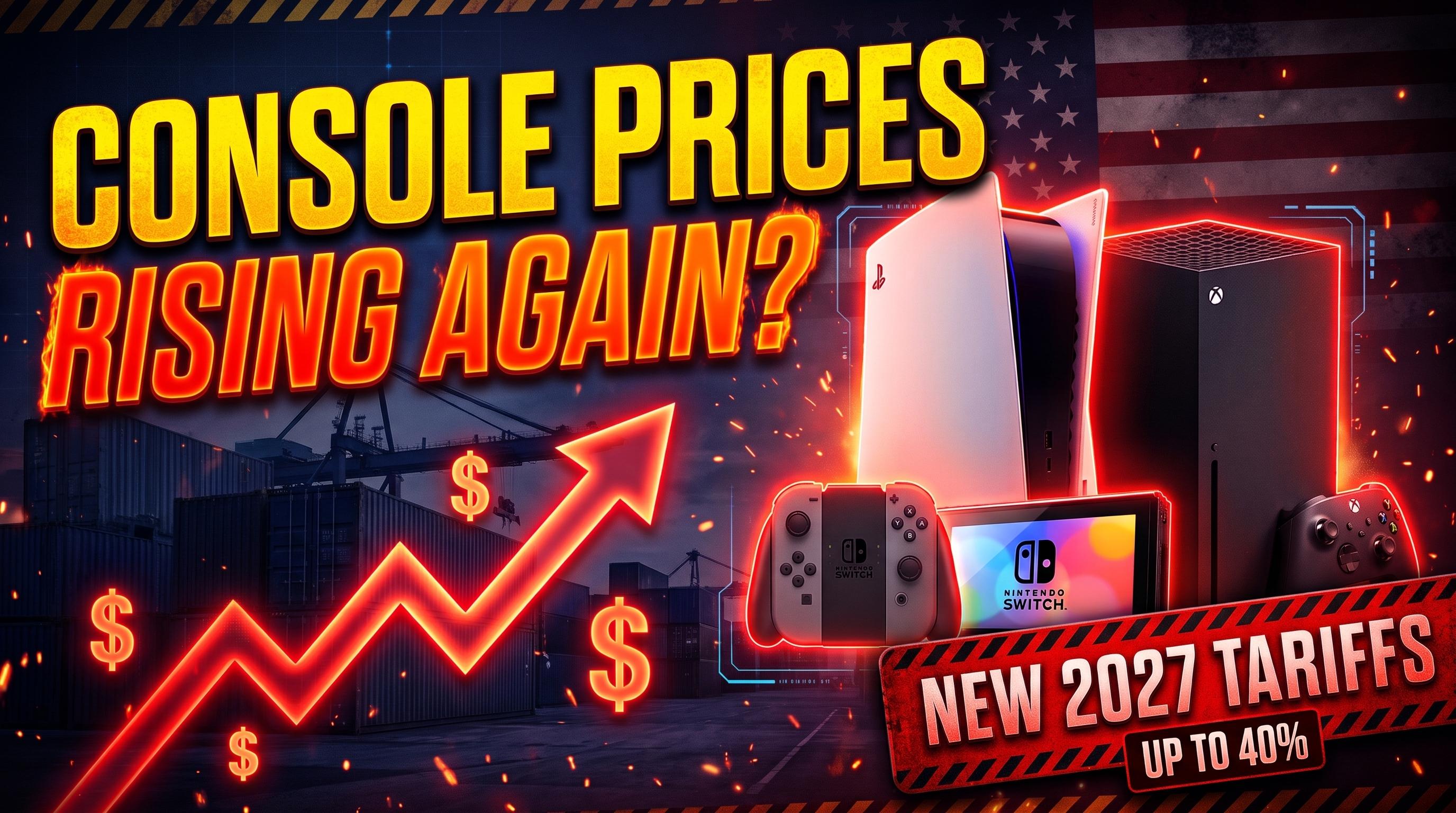
2026 has already been an unforgiving year for anyone shopping for new gaming hardware, and relief doesn’t appear to be on the horizon. A newly proposed round of US import tariffs targeting 14 major trading partners, including electronics manufacturing hubs like China and Vietnam, could trigger yet another wave of console price increases as early as January 2027.
At a glance: the proposal would put tariffs of up to 40% on China, up to 35% on Vietnam and 20% to 25% on Japan and the EU. No console maker has announced new price hikes yet, but PS5, Xbox and Switch 2 prices are already up in 2026 because of the memory crisis.
What the new tariffs would look like
Under the newly unveiled tariff schedule, imports from China face duties of up to 40%, while goods shipped from Vietnam could be hit with rates of up to 35%. Several other major trading partners, including Japan and European Union nations, face potential tariff tiers of 20% to 25%.
Certain electronic goods could still receive exemptions, and existing bilateral trade agreements may cap the final rates for specific countries. Even so, the proposal puts immense fresh pressure on Sony, Microsoft and Nintendo.
Bypassing the Supreme Court ruling
Earlier in 2026, the US Supreme Court struck down the administration’s initial round of “Liberation Day” tariffs, ruling that the emergency statute invoked to justify them did not authorize such levies. Platform holders then received substantial tariff refunds, with Sony alone estimated to have recovered $508 million. None of those savings were passed back to gamers through retail price cuts.
To get around the Supreme Court’s block, the new proposal relies on Section 301 of the Trade Act of 1974, which permits tariffs against countries found to be engaging in unfair trade practices after formal trade investigations.
Why moving factories out of China no longer solves the problem
Over the past several years, Sony, Microsoft and Nintendo shifted much of their final console assembly out of China and into Southeast Asia, particularly Vietnam, specifically to shield themselves from steep US import duties. With the new proposal, that strategy no longer offers full protection:
Vietnam is directly targeted, with proposed rates of up to 35%.
Core internal hardware such as power supplies, batteries and board components is still heavily sourced from China, driving up bill-of-materials costs even for consoles assembled elsewhere.
Tariffs collide with the ongoing memory crisis
Unlike past console generations, which steadily dropped in price over their lifespans, current-gen systems have become noticeably more expensive throughout 2026. Surging DRAM and NAND flash costs, driven by massive AI data-center demand, have already pushed the major hardware makers to raise retail prices:
PlayStation 5 / PS5 Pro (April 2026): prices increased across all models due to global economic pressures.
Steam Deck OLED (May 2026): up by as much as $300, reaching $949 for the 1TB model.
Xbox Series X|S (August 2026): prices raised across the lineup.
Nintendo Switch 2 (September 2026): raised from $449.99 to $499.99 (€499.99 in Europe).
Will console prices go up again?
For now, none of the three major console manufacturers have officially announced new price hikes in response to the latest tariff plan, and hardware makers typically stockpile inventory ahead of customs deadlines to delay retail adjustments.
However, Microsoft has already warned that Xbox component costs could climb again in 2027, and memory prices are expected to stay elevated for years. Gamers may have very little room left to absorb another round of rising manufacturing costs.